
Rethinking Scanners Through the User’s Perspective
Reimagining clinical experiences through empathy, creativity, and storytelling
4 min read · Jul 12, 2025
Image designed by author
Getting an MRI scan isn’t fun for anyone, but for children, it can be downright terrifying.
Imagine, from the perspective of the child, being small, sick, and suddenly faced with a giant, noisy machine in a cold, unfamiliar room.
You’re told to lie perfectly still while this huge tube slowly moves around you, making loud, strange sounds.
It’s no wonder so many children cry, panic, or need to be sedated just to get through the scan.
That’s exactly what designer Doug Dietz witnessed one day on a hospital visit (I definitely recommend watching his fantastic TED Talk).
He’d come to see a new MRI scanner he had helped design, but saw a young girl freeze in fear at the sight of it. She was due to have a scan but was fearful of the experience.
Doug realised something important in that moment: the machine might work fine, but the experience was failing the people it was meant to help.
From Panic to Play
Moved by what he saw, Doug went back to the drawing board. This time, with a new focus: what does the MRI experience feel like for a child?
He started spending time with paediatric patients, talking with hospital staff, and observing the real moments that make or break the experience.
He and his team even brought children and families into ideation sessions to co-create solutions. It became clear that if the machine couldn’t change, the environment around it had to.
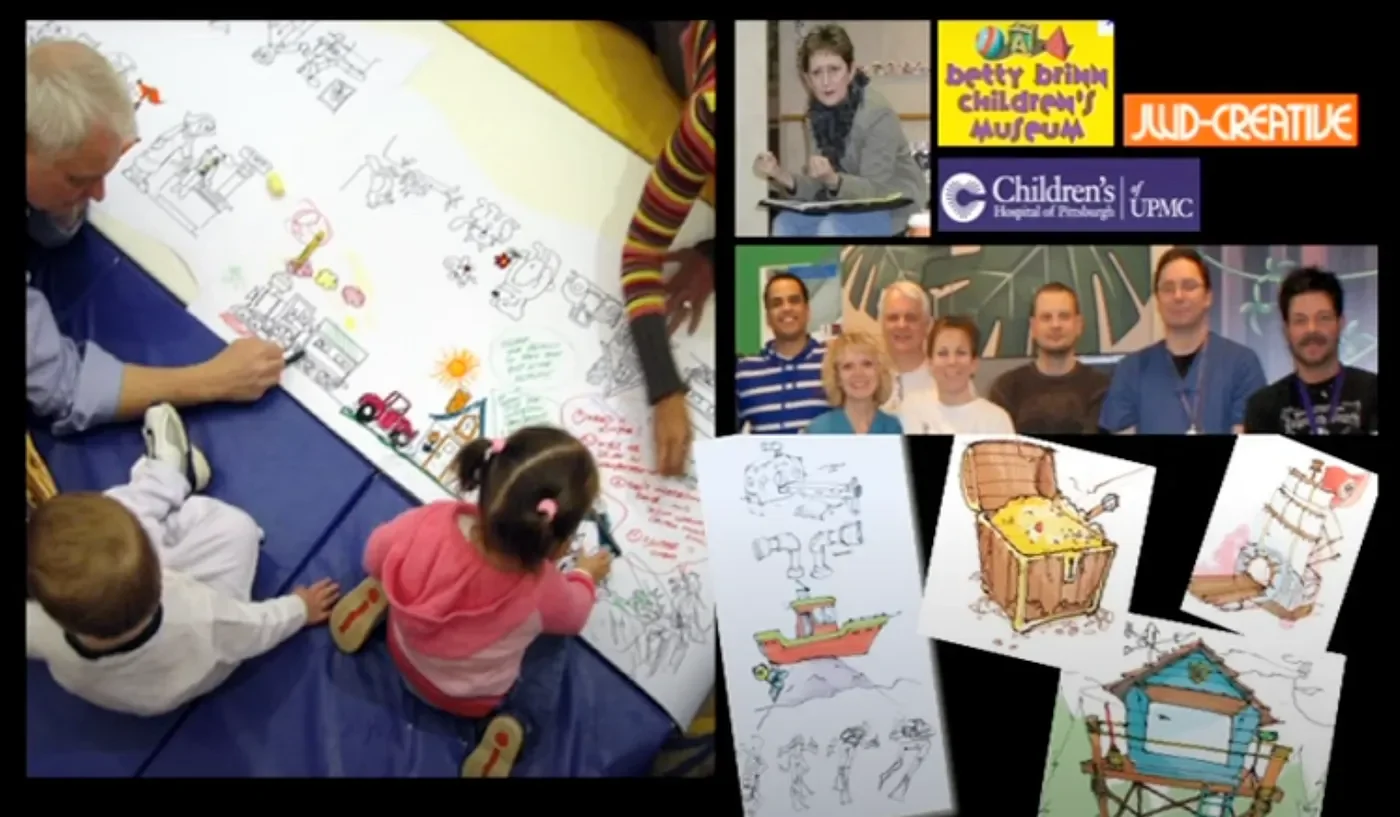
An ideation session for the MRI scanner’s new design (Source: Screenshot from Doug Dietz’s TED Talk)
Designing for Imagination
The result was the “Adventure Series”, a reimagined MRI experience built around immersive, kid-friendly themes like pirates, space exploration, camping, and jungle safaris. The scanner itself stayed the same, but the room around it was completely transformed.
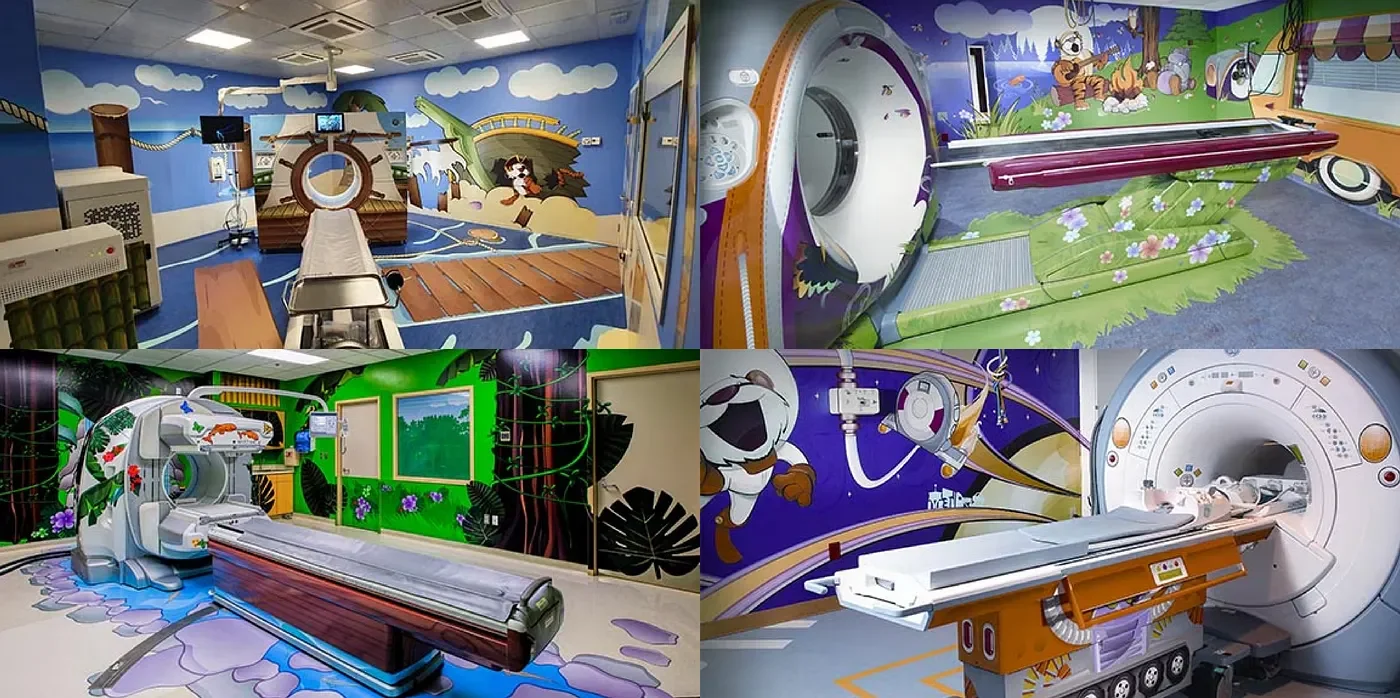
Pirated Island CT Scanner (top left), Cosy Camp PET/CT Scanner (top right), Jungle Adventure Nuclear Scanner (bottom left), Space Runway MR Scanner (bottom right). (Source: GE Health)
In the Pirate Island theme, the scanner bed was reimagined as a canoe through storytelling. Staff would say things like:
“This is your boat, so you’ve got to stay really still so it doesn’t rock. And if you’re super still, you might even see fish jumping over you!”
The themes extended beyond the scanner room. Hallways leading in were decorated to match the story, giving children the feeling of stepping into an adventure the moment they arrived.
To support the experience, they also created an Explorer’s Handbook, including:
Field Guides with tips and tricks on creating adventure stories for the patients
Colouring books to engage patients’ creativity and educate them at the same time
Posters to decorate the space and encourage the staff to improve patients’ experiences
Reward stickers to celebrate each child’s bravery
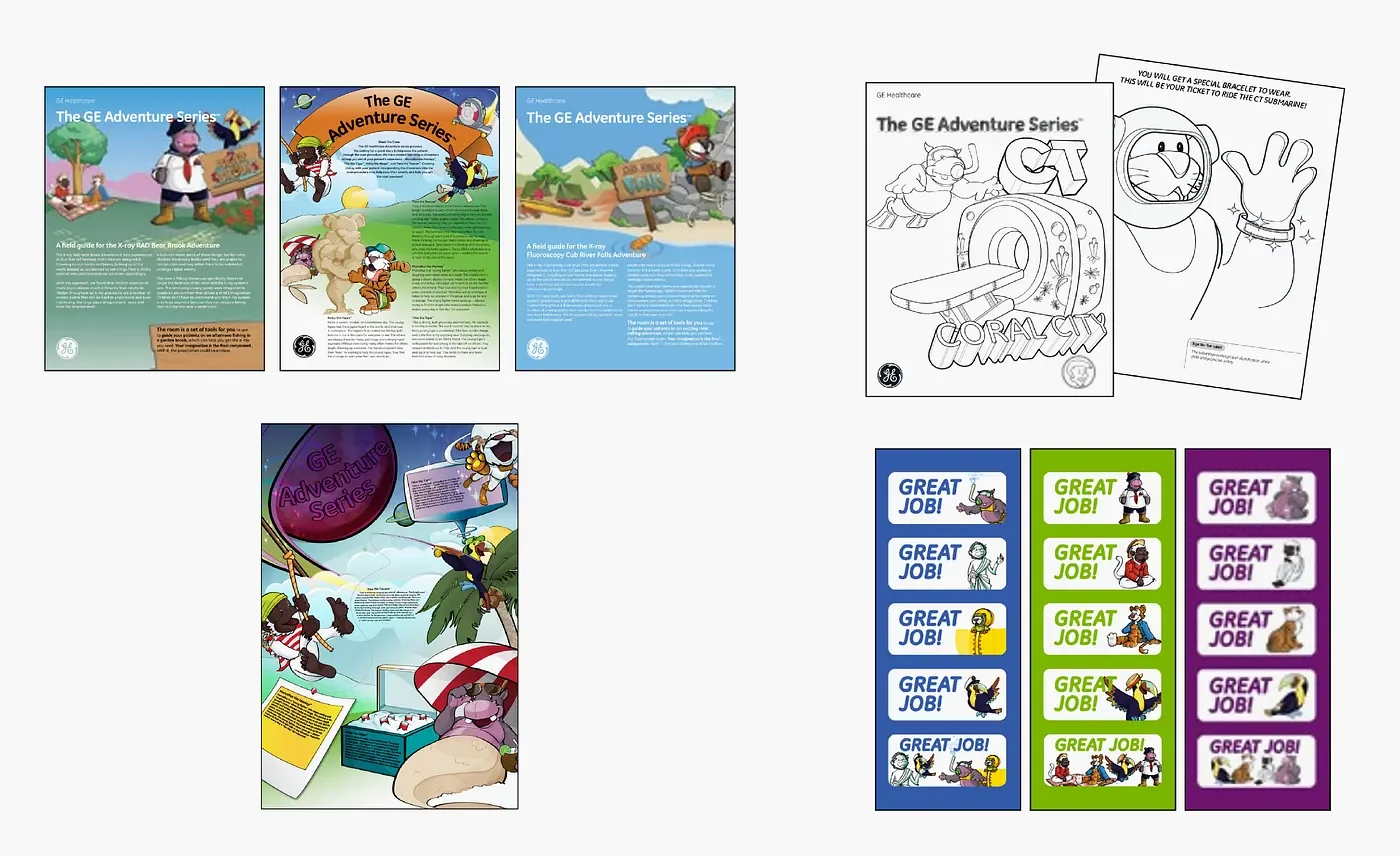
Field Guides (top left), Colouring Books (top right), Poster (bottom left), Stickers (bottom right). (Source: GE Health)
What I love most about this is how the storytelling doesn’t stop at the scanner; it’s woven throughout the entire experience, helping keep children engaged and easing anxiety.
The Impact So Far
The impact? Huge.
At one hospital, staff reported that before the redesign, about 80% of children needed to be sedated for their scans. After the Adventure Series was introduced, that number dropped to under 1%. Doug Dietz shares this in his TED Talk, explaining that the change led to fewer delays, lower risk, and shorter waiting lists.
Hospitals were able to scan more children per day, and parents experienced significantly less stress.
Similar kid-friendly MRI setups have shown great results as well. One Danish hospital used themed rooms and got a 98% success rate for scans without sedation.
A case study featured by Cornell University also reported fewer delays, happier parents, and better experiences.
But maybe the most telling moment came when one young patient finished her scan, turned to her parents, and asked:
“Can we come back again tomorrow?”
A moment Doug recalls as a highlight of how transformative the experience had become.
What used to be one of the scariest parts of being in a hospital had become something playful, something a child might actually look forward to.
Designing With Meaning
I first came across this story about five years ago when I was working on my uni dissertation. I stumbled on Doug Dietz’s TED Talk, and it really stuck with me. Even though it wasn’t a graphic design-focused project, it still hit home.
Designing with real people in mind is something that applies no matter what kind of design you do. It’s essential to design with empathy.
Doug said it better than I ever could:
“When you design with meaning, good things will happen.”